

Tzedek, the root of the word tzedakah, means “righteousness” and “justice.” At Rodeph Sholom School, students learn that rather than simply giving charity, the commandment to give tzedakah teaches the importance of providing for those in need with dignity. This foundational understanding ensures that giving helps recipients become more self-sufficient, a principle that brings the school’s core values of Pursuit of Wholeness, Love of Learning, Community, and Responsibility into active practice.
A Mainstay of Middle School
The Tzedakah Project is a defining middle school experience, preparing students to apply Jewish values in exercising socially responsible leadership. The goal is for students to become passionate, informed citizens who are ready and able to steer the world toward tzedek. Though students arrive familiar with the concept, this semester-long project helps them pursue justice from a more nuanced perspective during their B’nai Mitzvah year, moving from abstract concepts to intentional action.
How the Project Works
The journey begins in January with a celebratory kickoff breakfast. During this event, faculty present project highlights and a timeline to parents and students, who then examine shared values through collaborative activities. Because the school views parent input as essential to the depth of this experience, families are invited to be active partners from the start.
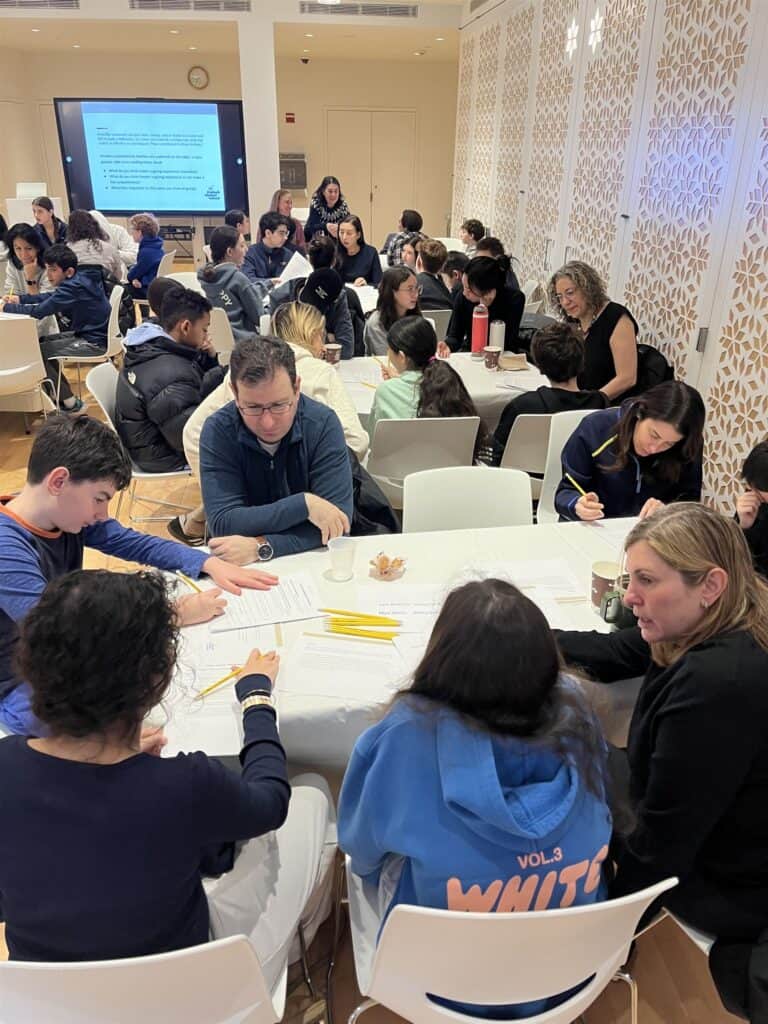
Prior to the kickoff meeting, parents are encouraged to initiate a discussion at home to reflect on what tzedakah and philanthropy mean within their own family traditions. These conversations yield a beautiful range of perspectives; for some, tzedakah is a moral duty to help others, while for others it represents a Jewish obligation to alleviate suffering or a commitment to creating a more just world. Families often explore what they might include in a family “mission statement” for helping the world and share personal stories of times when giving time or funds felt particularly impactful. By grounding the project in these diverse home reflections, students enter the research phase with a stronger sense of purpose. Throughout the spring semester, they identify causes that resonate with them personally—ranging from poverty and homelessness to environmental sustainability—and work in groups to identify nonprofit organizations making a meaningful impact in those fields.
From Research to Action
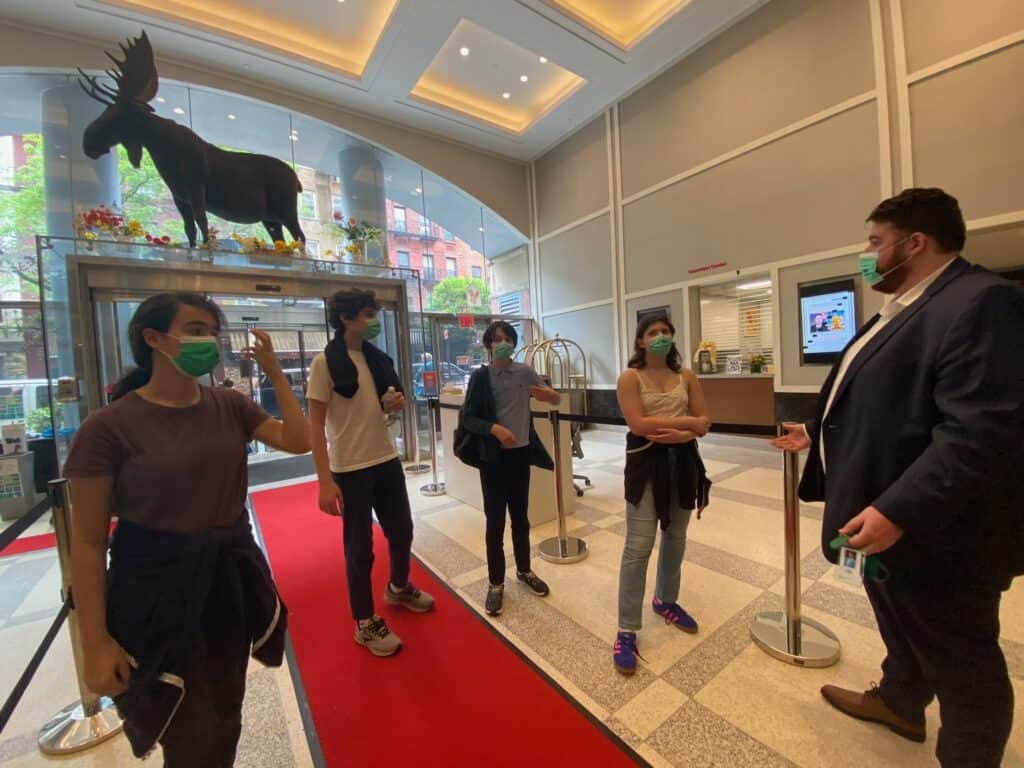
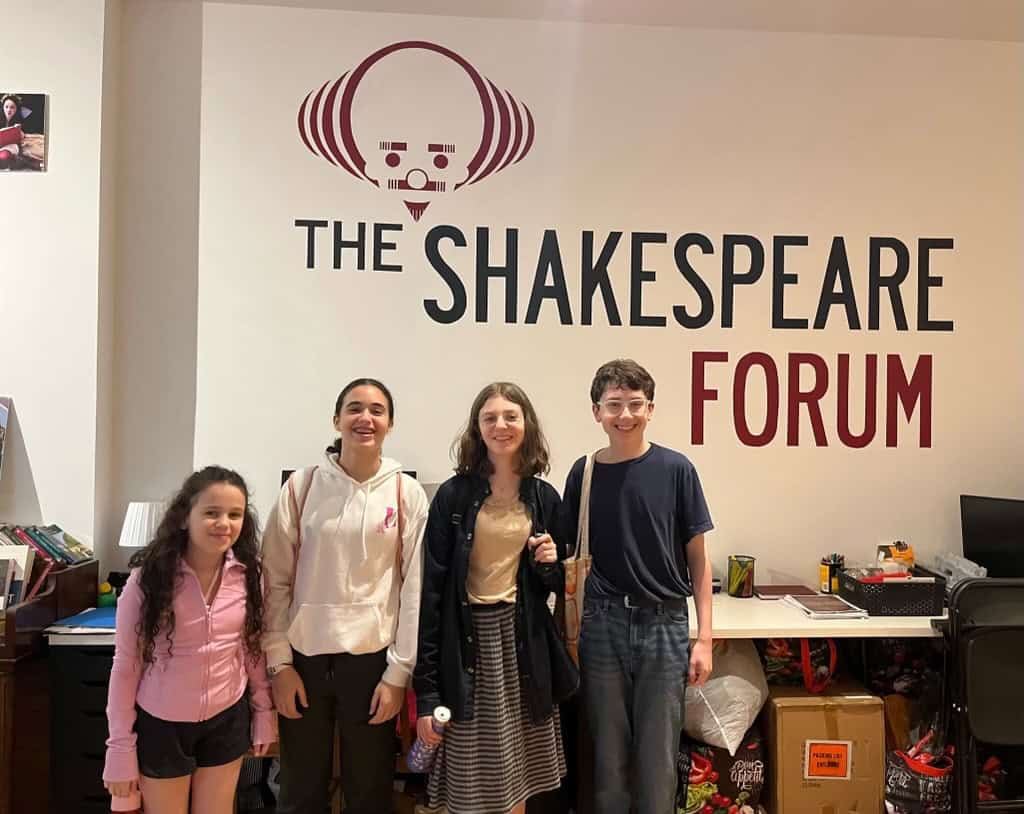
Each spring, the project moves from the classroom into the community. 7th graders visit a variety of nonprofit organizations related to their philanthropic causes, with some groups conducting virtual meetings while others leave campus to visit organizations in person. The causes students explore reflect both their personal passions and current global needs, including Access to Healthcare, Hunger and Food Access, Inequality in Education, Gender and LGBTQ+ Rights, Climate Change, and Senior Support.
The diversity of these interests is reflected in the school’s past partnerships with organizations such as A Wider Bridge, Adamah, Advocates for Children of New York, City Harvest, Dayenu, DOROT, Grassroots Grocery, Washington Heights Y, WSCAH, and YPC of New York City. Each year brings new selections as students respond to emerging issues, ensuring the project remains a dynamic part of their education.
“As a student-athlete, I never realized that for many kids my age, the phrase ‘no uniform, no play’ is a literal barrier to the sports I love. Through my research into New Heights Youth, Inc., I began to see the difference between just giving and pursuing justice. It wasn’t just about a pair of sneakers; it was about evening the playing field so every kid has the same opportunity to learn and compete. That sense of fairness is something I’m now carrying with me into my 8th Grade capstone project.” — Rafi, 8th Grade
The Philanthropic Component
A unique aspect of the project reimagines the B’nai Mitzvah tradition. In lieu of individual gifts, families are invited to contribute to a collective Class Tzedakah Project fund. This shift encourages families to think about the “greater good” of the community over individual exchange. Students then take on the responsibility of “philanthropists,” justifying how to allocate their portion of the grade-wide fund based on their research and financial analysis of their chosen organizations. This approach transforms a personal milestone into a communal act of change.
“Our group all shares a deep love for the arts—whether it’s singing, dancing, or stage management—so it felt unfair to us that some students are cut off from those programs just because of financial constraints. Because we view the arts as an essential part of education, we felt a huge responsibility to use our portion of the class fund wisely. We eventually decided to divide our contribution among three different organizations to ensure we were supporting both after-school arts and critical tutoring resources.” — Hanna, 8th Grade
What Students Gain
Through this comprehensive experience, 7th graders develop critical thinking skills about social justice and learn to evaluate organizational effectiveness. They move beyond an abstract understanding of tzedakah to embodied knowledge—meeting people affected by injustice, witnessing organizations’ work firsthand (such as the intergenerational connections fostered at DOROT), and making consequential decisions about resource allocation. Students discover their own capacity to create change and leave the project with a practical toolkit for lifelong philanthropy.
“When our group saw how quickly homelessness and rent were rising across every borough in the city, we knew we had to focus on housing insecurity. We decided to look past the ‘fancy’ names and find the organization that could put the most ‘heads in beds.’ It was eye-opening to realize that some organizations are serving so many people that they can’t even afford to meet the total need. It made our decision feel much more urgent.” — Harlow, 8th Grade
Tzedakah Across the School
The commitment to tzedakah is a thread that runs through every grade level at Rodeph Sholom School. In the 4th Grade, students engage in their own Tzedakah Project, studying Maimonides’s Ladder of Tzedakah and partnering with New York Common Pantry to address food insecurity. School-wide projects, like the Tu BiSh’vat initiative, bring all divisions together to support environmental restoration through the Jewish National Fund. From Early Childhood through 8th Grade, weekly contributions are tied to curricular themes, ensuring that for every student, pursuing justice is a way of life.